vq ↔ vibe-qc version compatibility
vq is shipped as a subpackage of vibe-qc but carries its own version
line (vibe-queue/pyproject.toml + src/vq/__init__.py). This page
maps the two so you can answer “which vq did v0.X.Y of vibe-qc ship
with?” without spelunking the git log.
The queue ships ~5–10× more often than vibe-qc (small daemon / CLI / hardening patches land continuously; vibe-qc tags are milestone-paced). Pinning to a specific vq is rarely needed; pin to a vibe-qc tag and you get the vq it shipped with.
Why a separate vq version
Considered “use vibe-qc’s version line for vq too” — rejected because:
vq’s release cadence is ~10× vibe-qc’s (50+ patches across the v0.6.x arc alone, vs. 8 vibe-qc patches over the same window). Stamping every vq commit with the current vibe-qc tag would lose per-patch granularity entirely.
vibe-queue/docs/roadmap_history.md(through v0.9) andCHANGELOG.md(from v0.26.0) record per-vq-version history; cross-referencing it against vibe-qc tags via this matrix keeps the granular record useful.Operators that want a specific behaviour (“the v0.6.51
--depends-ondispatch gate” / “the v0.7.0 agent protocol”) can name it directly rather than via “the vibe-qc tag that included it.”
Considered “split vq into its own git repo” — also rejected,
mostly for atomic-commit and drop-box-convention reasons (vq
features land based on what vibe-qc needs; splitting would force
two-repo coordination for trivially-coupled changes). vq stays in
the vibe-qc monorepo at vibe-queue/.
Config shape across versions
Console session-store transition (September 2026, unreleased)
The console now requires a private SQLite session record in addition to its
signed cookie. Existing stateless cookies require a new login; accounts and
passwords keep their format. Logout revocation and login counters are shared
only by workers using the same local store. Do not mix stateless and revocable
workers. A rollback or account-backup restore must stop the console and rotate
the signing secret so revoked sessions cannot return. See
fleet_console.md for details.
General configuration compatibility
A fleet is mixed-version by construction: the driver runs the vq being developed, the hosts run whatever the last rollout pinned. So the config file is read by vq versions older than the one that wrote it, and how that read fails is a fleet-availability question, not an ergonomics one.
Since v0.26.1 the rule is:
Unknown top-level keys are ignored, with one warning per process. They are how a newer vq’s additions look to an older one. Refusing the file instead — which is what
extra="forbid"did until v0.26.1 — turns a key the host could not have used into a host that has no config at all.Unknown keys inside a section are still fatal.
[notifications] webhook_urlsis a typo, not a version skew, and silently disabling notifications is worse than a load error.min_vq_versionis the opt-out. A config that sets it is refused by any older vq with the version it needs, named in the message.
The consequence for a change here: adding a top-level key is safe and needs
nothing. Adding one that must not be ignored — a [multi_user] policy input,
a repository the pin loader has to consult — means raising min_vq_version
in the same commit, because nothing infers it. An older vq cannot tell an
additive key from a load-bearing one; that judgement is the author’s, and this
key is where it gets recorded.
Mapping
Newest first. Released rows record the vq version stamped in
vibe-queue/src/vq/__init__.py at the moment the vibe-qc tag was cut. Rows in
the accepted-report era also match the committed fleet report unless the row
explicitly records a retracted report. A candidate row is explicitly labeled
and is not a release mapping until that tag and report exist. The “headline vq
features” column points at notable behaviour the operator might want to know
about; the full per-vq history is in roadmap.md.
vibe-qc tag |
vq version |
codename |
headline vq features in this ship |
|---|---|---|---|
v0.15.157 |
0.25.7 |
Neese’s Cheetah |
Multi-k pure-DFT dense-core auto-tail (#518), fail-closed multipole far-field routing (#511), broker workflow projection (#347), and release-test artifact containment (#508). vq version retained from v0.15.156. |
v0.15.156 |
0.25.7 |
Neese’s Cheetah |
BIPOLE exact convergence confirmation includes DFT+U (#514 successor), and pbs-cluster branch-runtime updates no longer inherit the release tag (#535). |
v0.15.149 |
0.25.6 |
Neese’s Cheetah |
Incremental-Fock disengage gate (#129), UKS stability/determinant certification (#447/#474), and the bugctl ledger provenance repairs (#443/#124/#453/#458). vq unchanged. |
v0.15.148 |
0.25.6 |
Neese’s Cheetah |
Published DLPNO preset values and threshold provenance (#416/#417), selected-CI convergence contract (#107), molecular SCF max_iter validation (#392), Molden SCF-root preservation (#12). vq unchanged. |
v0.15.147 |
0.25.6 |
Neese’s Cheetah |
MSINDO 2-D Madelung basis-invariance (#187), PM7 core-radius parser repair (#224), citation-route gating (#442), vq admin test isolation (#438). vq unchanged. |
v0.15.146 |
0.25.6 |
Neese’s Cheetah |
Scheduler-kill false-green closed (#414), SECCM gap-guard restored under smearing (#422), measured k-route band edges/gaps (#426), CCM backend+parity-hold identity (#344). vq unchanged. |
v0.15.145 |
0.25.6 |
Neese’s Cheetah |
Pair-distance-correct semiempirical image selection (#316), GFN2 TM parameter projection (#43), fail-loud periodic k-route non-convergence (#342). vq unchanged. |
v0.15.144 |
0.25.6 |
Neese’s Cheetah |
slurm-cluster serial runtime-probe isolation (unfences scheduler rollouts), scoped-payload kernel-placement verification, and an input-hardening sweep across quota caps, drains, throttles, timeouts, pause clocks, and capacity snapshots. |
v0.15.143 |
0.25.5 |
Neese’s Cheetah |
Host-local scheduler failure containment, bounded timing inputs, correct unbounded log following, and crash-safe mixed-host legacy-rollout recovery. |
v0.15.131 candidate (unreleased) |
0.25.0 |
TBD at ship |
Managed exact |
v0.15.85-v0.15.130 |
0.24.0 |
- |
Accepted release reports pin the 0.24 fleet-rollout, exact-provenance, scheduler-runtime, and console baseline. |
v0.15.81-v0.15.84 |
0.23.2 |
- |
Release-report mapping. |
v0.15.79-v0.15.80 |
0.23.1 |
- |
Release-report mapping. |
v0.15.78 |
0.23.0 |
- |
Release-report mapping. |
v0.15.77 |
0.22.0 |
- |
Release-report mapping. |
v0.15.76 |
0.21.3 |
- |
Release-report mapping. |
v0.15.74-v0.15.75 |
0.21.2 |
- |
Release-report mapping. |
v0.15.72-v0.15.73 |
0.21.1 |
- |
Release-report mapping. |
v0.15.68-v0.15.71 |
0.21.0 |
- |
Release-report mapping. |
v0.15.67 |
0.20.2 |
- |
Release-report mapping. |
v0.15.66 |
0.20.1 |
- |
Release-report mapping. |
v0.15.65 |
0.20.0 |
- |
Release-report mapping. |
v0.15.64 |
0.19.1 |
- |
Release-report mapping. |
v0.15.63 |
0.19.0 |
- |
Release-report mapping. |
v0.15.62 |
0.18.1 |
- |
Tag source stamp. Its fleet report was retracted because it relied on a |
v0.15.61 |
0.18.0 |
- |
Release-report mapping. |
(main history) |
0.8.10 |
Tarjan’s Bridge |
Remote |
(main history) |
0.8.9 |
Cook’s Hierarchy |
|
(main history) |
0.8.8 |
Turing’s Halt |
|
(main history) |
0.8.7 |
Hoare’s Triple |
|
(main history) |
0.8.6 |
Codd’s Audit |
Multi-user RPC audit-trail. New |
(main history) |
0.8.5 |
Knuth’s Concrete |
Mirror of v0.8.3’s fan-out for the mutating verbs. |
(main history) |
0.8.4 |
Brooks’s Mythical |
New built-in |
(main history) |
0.8.3 |
Dijkstra’s Shortest |
|
(main history) |
0.8.2 |
Lamport’s Logical |
|
(main history) |
0.8.1 |
Karp’s Reduction |
extends the v0.8.0 RPC pattern to |
(main history) |
0.8.0 |
Dahl’s Simula |
daemon-side RPC for admin-status. Closes the v0.7.12 user-XDG vs daemon-XDG split footgun via new |
(main history) |
0.7.18 |
Kay’s Object |
new |
(main history) |
0.7.17 |
Postel’s Robustness |
webhook |
(main history) |
0.7.16 |
Codd’s Tuple |
new |
(main history) |
0.7.15 |
Shannon’s Entropy |
cross-user resource cap tripwire. 6 new tests pinning the operator-stated invariant that the daemon’s global |
(main history) |
0.7.14 |
Hamming’s Code |
multi-user test coverage audit (secondary half of v0.7.13). 8 new tests pinning multi-user-specific codepaths across v0.7.7–v0.7.11 ships: cross-user spec resolution, –depends-on-any submitter-scope validation, admin-status path baseline, cross-user list_jobs + collapse-arrays, remote –array wire shape multi-user neutrality. No production code changes. |
(main history) |
0.7.13 |
Backus’s Form |
round-3 hardening + coverage audit. 9 new tests filling edge-case gaps across the v0.6.18 → v0.7.12 ships (DNS-failure handling, KeyboardInterrupt propagation, JSON aggregation non-dict results, archived-spec workdir fetch, afterany INTERRUPTED tripwire, reset-branch fetch-failure SHA preservation, collapse-array boundaries, remote –array wire-shape backward compat). No production code changes. |
(main history) |
0.7.12 |
Wirth’s Modula |
docs-only ship: new |
(main history) |
0.7.11 |
Stroustrup’s Stencil |
remote |
(main history) |
0.7.10 |
McCarthy’s List |
new |
(main history) |
0.7.9 |
Liskov’s Substitution |
new |
(main history) |
0.7.8 |
Knuth’s Schedule |
new |
(main history) |
0.7.7 |
Cerf’s Datagram |
new |
(main history) |
0.7.6 |
Tanenbaum’s Mailbox |
parallel fan-out for every |
(main history) |
0.7.5 |
Hopper’s Compiler |
3-tier host recovery channels contract + |
(main history) |
0.7.4 |
Ritchie’s Pipe |
per-env |
(main history) |
0.7.3 |
Dijkstra’s Semaphore |
|
(main history) |
0.7.2 |
Engelbart’s Demo |
|
(main history) |
0.7.1 |
Lamport’s Clock |
operator-visibility hardening on |
(main history) |
0.7.0 |
Hoare’s Pipeline |
per-job workdir + agent protocol (v0.6.54); |
v0.9.1 |
0.6.39 |
— (queue codenames begin at v0.7.0) |
Round-2 multi-user hardening — daemon auto-cleanup multi-user-aware |
v0.9.0 |
0.6.39 |
— |
(same as v0.9.1) “Knowles’s Kingfisher” |
v0.8.3 |
0.6.2 |
— |
early multi-user backbone + lifecycle state machine |
v0.8.2 |
0.6.2 |
— |
(same) |
v0.8.1 |
0.6.2 |
— |
(same) |
v0.8.0 |
0.6.2 |
— |
(same) “Grimme’s Gecko” |
v0.7.14 |
0.0.1 |
— |
initial vq scaffolding |
(older) |
not shipped |
— |
vibe-qc pre-dates the vq subpackage |
v0.7.x onward — codename convention
The vq subpackage starts using codenames at v0.7.0, drawing from
computer-science pioneers (distinct from vibe-qc’s
chemistry/physics scientists like Löwdin, Pulay, Grimme,
Knowles). Same [surname]'s [object] shape vibe-qc uses, so the
two systems’ release notes stay culturally adjacent.
Tracker for picked + reserved names:
vq version |
codename |
theme link |
|---|---|---|
v0.7.0 |
Hoare’s Pipeline |
Tony Hoare, CSP — academic foundation for “async processes communicating through queues,” exactly the multi-chat coordination model v0.6.54 made explicit. |
v0.7.1 |
Lamport’s Clock |
Leslie Lamport’s 1978 paper on distributed event ordering — single instantaneous readings ( |
v0.7.2 |
Engelbart’s Demo |
Doug Engelbart’s 1968 Mother of All Demos — show the human what’s actually on the machine. |
v0.7.3 |
Dijkstra’s Semaphore |
Edsger Dijkstra’s foundational synchronization work — every wait is bounded. v0.7.3 applies that discipline to vq’s ssh/scp transport via |
v0.7.4 |
Ritchie’s Pipe |
Dennis Ritchie’s Unix pipes — composable stream feeds. v0.7.4 makes |
v0.7.5 |
Hopper’s Compiler |
Grace Hopper’s compilers — check the source before you commit to running it. v0.7.5 audits host recovery channels before trusting them to the fleet. |
v0.7.6 |
Tanenbaum’s Mailbox |
Andrew S. Tanenbaum’s distributed systems / operating systems textbooks — the mailbox is the canonical message-passing concurrency primitive. v0.7.6 parallelizes per-host fan-out: each thread sends to its host’s “mailbox” (the ssh transport) and |
v0.7.7 |
Cerf’s Datagram |
Vint Cerf co-invented TCP/IP, the foundation of “reliably transfer arbitrary data between two machines.” |
v0.7.8 |
Knuth’s Schedule |
Donald Knuth’s TAOCP devotes Volume 1 to coroutines and Volume 3 to sorting/searching, with extensive treatment of scheduling problems throughout. The dispatch gate’s “all-predecessors-success AND all-predecessors-terminal” conjunction is a textbook job-scheduling predicate; v0.7.8 adds the afterany half of the literal SLURM scheduler’s predicate vocabulary. |
v0.7.9 |
Liskov’s Substitution |
Barbara Liskov’s substitution principle — anything a downstream consumer expects of “the env on branch X” continues to hold after the reset-branch verb substitutes the working tree with the canonical upstream form. The verb literally enforces LSP for the env’s branch contract. |
v0.7.10 |
McCarthy’s List |
John McCarthy invented LISP and made the list the fundamental data structure of programming. The collapsed array row IS a list rendered as one row — and naming the predicate |
v0.7.11 |
Stroustrup’s Stencil |
Bjarne Stroustrup, C++. A “stencil” in C++ idiom is a template overlaid N times — exactly what |
v0.7.12 |
Wirth’s Modula |
Niklaus Wirth’s Modula language made “explicitly export every interface” foundational. The state-file audit doc explicitly enumerates every path vq touches — the export interface for the path layout, the way each |
v0.7.13 |
Backus’s Form |
John Backus + BNF (Backus-Naur Form). BNF made grammar explicit — every production rule written down, no implicit fallbacks. The round-3 audit makes each module’s contract surface explicit by pinning the edge-case branches the regular test files take for granted. |
v0.7.14 |
Hamming’s Code |
Richard Hamming’s error-correcting codes — the parity bits that catch silent corruption in seldom-exercised codepaths. The multi-user tests are vq’s equivalent: the seldom-exercised paths the operator touches only when the daemon’s running as root with [multi_user] enabled, exactly the scenario where a quiet regression would go unnoticed longest. |
v0.7.15 |
Shannon’s Entropy |
Claude Shannon’s information theory — channel capacity is a hard upper bound on throughput regardless of who’s transmitting. The host’s |
v0.7.16 |
Codd’s Tuple |
Edgar Codd’s relational model distinguished the underlying tuple (row) from any particular view over it. |
v0.7.17 |
Postel’s Robustness |
Jon Postel’s “be conservative in what you send” half of the robustness principle. The notify_on_states filter implements exactly that — the operator narrows the webhook stream to what they actually want to hear, instead of every terminal-state ping. |
v0.7.18 |
Kay’s Object |
Alan Kay, OO — “objects hide their state and expose behavior.” The recommend verb hides the ranking algorithm behind a single value the operator composes with via shell substitution. The chooser doesn’t need to know what the daemon’s load looks like; the verb encapsulates that. |
v0.8.0 |
Dahl’s Simula |
Ole-Johan Dahl co-invented Simula (the first OO language). Simula introduced encapsulating state behind a process-like object boundary — which is exactly what the RPC does for |
v0.8.1 |
Karp’s Reduction |
Richard Karp’s polynomial reductions show that once you solve one canonical NP-complete problem, the others reduce to it. v0.8.0 Dahl’s Simula was vq’s canonical “daemon-mediated state file” pattern; v0.8.1 reduces |
v0.8.2 |
Lamport’s Logical |
Leslie Lamport’s logical clocks are the foundation of distributed-system “did A happen before B” reasoning — and the canonical way to answer that is “send a message and see what comes back.” |
v0.8.3 |
Dijkstra’s Shortest |
Edsger Dijkstra’s shortest-path algorithm: reduce a new problem to a sequence of cheapest moves over an existing graph. v0.8.3 takes |
v0.8.4 |
Brooks’s Mythical |
Brooks’s Mythical Man-Month + “No Silver Bullet” — about the fundamental difficulty of building software when you don’t know what your tools actually do. |
v0.8.5 |
Knuth’s Concrete |
Donald Knuth + “Concrete Mathematics” — applying tools you already have to new but isomorphic problems. v0.8.3 fanned |
v0.8.6 |
Codd’s Audit |
Edgar Codd’s relational discipline was that every data fact should be record-able and queryable, not implicit in code paths. v0.8.6’s audit trail makes the queue’s mutating ops into first-class records: who did what when, on durable storage, queryable independently of the system that produced them. Codd’s name on the audit-trail capstone fits the v0.8.x architectural arc. |
v0.8.7 |
Hoare’s Triple |
Tony Hoare’s triples |
v0.8.8 |
Turing’s Halt |
The halting problem: given a program, will it terminate? |
v0.8.9 |
Cook’s Hierarchy |
Stephen Cook’s polynomial hierarchy classifies decision problems by the number of alternating quantifiers needed to express them. |
v0.8.10 |
Tarjan’s Bridge |
Robert Tarjan’s bridge-finding algorithm identifies the edges whose removal disconnects a graph — the critical “bridge” links. The SSH transport is the bridge between the laptop and the fleet; v0.8.10 extends the v0.8.7+8 primitives ( |
v0.8.11 onward |
see the catalog |
The rationale rows above stop here. Every name from v0.8.11 to v0.25.0 lives in |
src/vq/codename.py is the source of truth. RELEASE_CODENAMES is what
vq --version reads, and codename_for_version() implements the inheritance
rules: an explicit X.Y.Z entry wins, an unlisted patch inherits its parent
minor, and a PEP 440 .devN / aN / bN / rcN build resolves to the
release it is heading toward. Add a minor’s entry in the same commit that
bumps pyproject.toml and __init__.py; tests/test_codename.py fails the
suite if a version ships without one, or if the minor sequence develops a gap.
Names are settled at ship time: vq codenames track the thematic substance of the ship. The v0.27.0–v0.33.0 forward entries are provisional proposals, not reservations; re-confirm each name against the delivered concept before tagging its release.
The v0.13.0 to v0.25.0 names are a backfill, proposed and approved on
2026-09-09. The series lapsed after v0.12.0 while vq went on to 0.25.7, so thirteen
minor lines shipped unnamed; the names were reconstructed from the monorepo’s
own version-bump commits rather than invented. Two earlier lines were resolved
in the same pass, because names had been attached to feature bullets rather
than to releases: v0.11.0 carried four candidates and resolves to Eager’s
Sharing, v0.12.0 carried five and resolves to Hopper’s Bug. The unpicked
names stay in STATUS.md as the per-feature labels they always
were; they are not alternative release names. See
.release-status/CODENAME-PROPOSAL.md
for the reasoning behind each.
Minor-release artwork
The release gallery presents the complete series together. Each image below belongs to a minor line; patch releases inherit it.
v0.7.0 — Hoare’s Pipeline
Per-job working directories isolate each task within the agent protocol.

v0.8.0 — Dahl’s Simula
Daemon-mediated RPC gives administrative state an explicit process boundary.

v0.9.0 — Tukey’s Window
The live vq top view brings one window of job resource activity into focus.

v0.10.0 — Lampson’s Hint
Advisory host availability uses vq host down/up to guide dispatch.

v0.11.0 — Eager’s Sharing
Host pools and a default pool organize how work is shared across machines.

v0.12.0 — Hopper’s Bug
Tracing a failure back to its cause makes the queue diagnosable.

v0.13.0 — Gray’s Log
The job lifecycle timeline records ordered transitions and pending reasons.

v0.14.0 — Needham’s Principal
Identity checks distinguish the principal behind a driver operation.

v0.15.0 — Schroeder’s Authority
Dispatch stops are attributed to the authority holding them in place.

v0.16.0 — Sutherland’s Sketchpad
The first fleet console views connect a cross-host overview to live job detail.
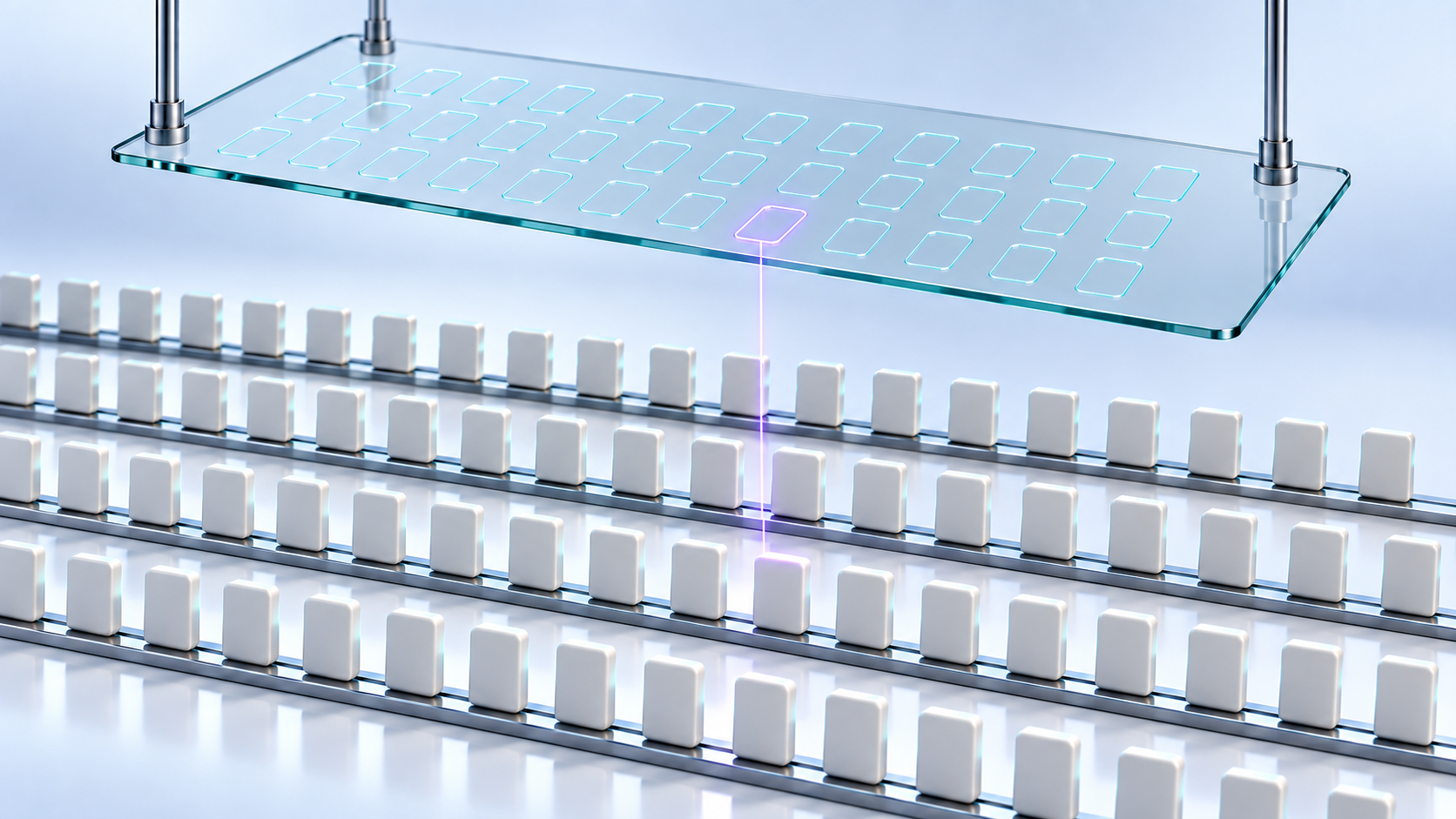
v0.17.0 — Corbató’s Password
Console accounts and sessions distinguish authenticated access.

v0.18.0 — Abadi’s Delegation
Delegated administration carries authority across a fleet rollout.

v0.19.0 — Merkle’s Hash
Exact-SHA release evidence binds rollout decisions to content-addressed reports.

v0.20.0 — Herlihy’s Wait-Free
Scheduler runtime updates proceed without draining or waiting for running work.

v0.21.0 — Kilburn’s Page
One program name maps to separate runtime slots for different source revisions.

v0.22.0 — Little’s Law
The concurrency quota becomes visible in vq overview.

v0.23.0 — Saltzer’s Binding
The runtime_slot_root setting makes runtime placement an explicit binding.

v0.24.0 — Cheney’s Semispace
Build beside the live runtime, switch on success, and reclaim the old space.

v0.25.0 — Härder’s Atomicity
Managed self-update preserves recoverable state across lifecycle transactions.

v0.26.0 — Raymond’s Bazaar
Licensing, security, contributor guidance and documentation make vq publishable.

v0.27.0 — Fidge’s Timestamp (provisional)
Provisional concept: logical ordering across hosts without a shared timepiece.
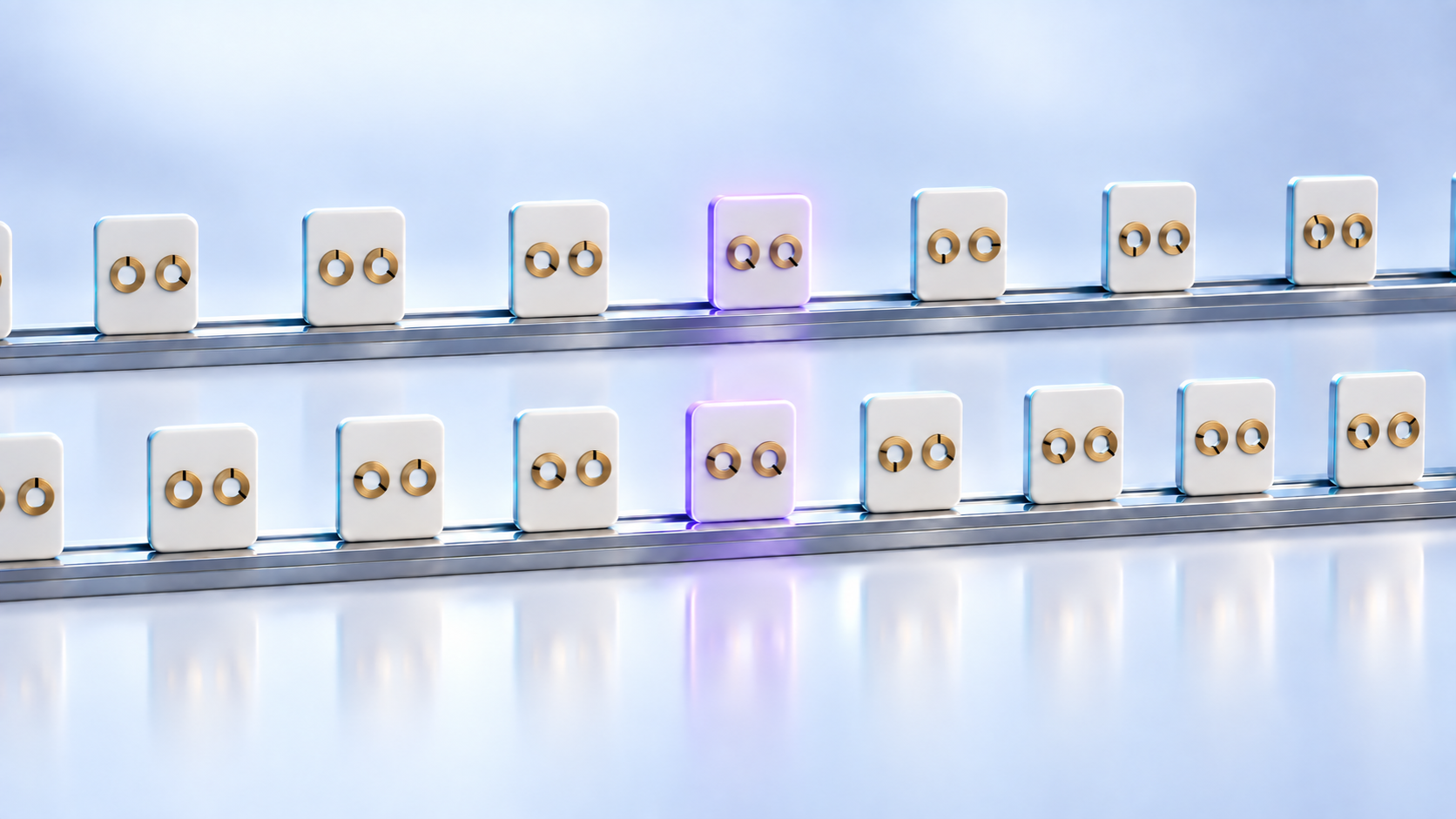
v0.28.0 — Mattern’s Cut (provisional)
Provisional concept: a consistent snapshot across independently running hosts.

v0.29.0 — Braden’s Requirements (provisional)
Provisional concept: accept varied inputs while emitting a strict, uniform form.

v0.30.0 — Bloom’s Filter (provisional)
Provisional concept: probabilistic membership checks for deduplication and idempotency.

v0.31.0 — Stonebraker’s Vacuum (provisional)
Provisional concept: reclaim dead space through archiving and automatic cleanup.

v0.32.0 — Brewer’s Partition (provisional)
Provisional concept: tolerate a network split while each side keeps operating.

v0.33.0 — Erlang’s Blocking (provisional)
Provisional concept: counted permits enforce admission and concurrency limits.

Updating this matrix
When the release chat cuts a new vibe-qc tag:
# At repo root, AFTER the tag exists:
git show <new-tag>:vibe-queue/src/vq/__init__.py
# → __version__ = "0.X.Y"
Add a row to the table above (newest first). The queue chat or the release chat can do this; whoever notices the gap fixes it.
The “headline features” column is summary-style — link the roadmap rather than re-explaining. Keep this doc short.