Release codenames
Every vibe-view minor release carries a “Person’s Animal” codename. It is
printed by vibe-view --version, shown in the browser and desktop About
boxes, and stamped on the CHANGELOG section for the release.
How a name resolves
The catalogue lives in vibeview.codenames and is the single source of
truth — the CLI, both About boxes and this documentation site all read it.
RELEASE_CODENAMES maps X.Y.Z to a name, and
codename_for_version() resolves in this order:
Strip any PEP-440
.devN/aN/bN/rcNsuffix and local version label, so a dev build inherits the codename of the release it leads up to.Look up the resulting
X.Y.Z.Fall back to the parent minor,
X.Y.0— so patch releases inherit without needing an entry of their own.Return
Noneif the minor has no name; the surfaces then print the bare version rather than a dangling em dash.
A patch release only needs its own entry when it has a distinct theme worth surfacing separately.
The catalogue
Version |
Codename |
For |
|---|---|---|
2.15.0 |
Roothaan’s Roadrunner |
The name v2.15.2 shipped with |
2.16.0 |
Sayle’s Starling |
vibe-view becomes a product you can adopt on its own |
2.17.0 |
Lorensen’s Loon |
TREXIO molecular orbitals in the isosurface workflow |
2.18.0 |
Richardson’s Robin |
Biomolecules, secondary structure, cartoons — approved, not yet released |
2.19.0 |
Phong’s Pheasant |
Materials and lighting — approved, not yet released |
2.20.0 |
Levoy’s Lemur |
Transfer functions and direct volume rendering — approved, not yet released |
3.0.0 |
Levinthal’s Lynx |
Held for a major version about the interactive viewer itself — approved, not yet released |
Note
Roothaan’s Roadrunner predates the split and the per-product pools, and it borrows a quantum-chemistry figure that vibe-qc had already used (Roothaan’s Raven, v0.1.0). It is in the wild — in the CLI, in the desktop About box and in a tagged wheel — so it stands as history, by maintainer decision on 2026-09-09. Names from v2.16.0 on come from the pool below.
Six names are registered ahead of their cuts, all approved by the maintainer on 2026-09-09 — v2.16.0 so its artwork brief could be written against it, and v2.17.0 through v3.0.0 as a settled slate.
Registered is not scheduled. A version resolves to its name whenever it is
cut, and an entry here commits to nothing about when, or whether, that release
happens. What each name is for is recorded in the catalogue above and in the
comment on its entry in RELEASE_CODENAMES.
Roger Sayle’s RasMol (1992) was the first molecular viewer a scientist could
simply install and run — free, and without the program that produced the data.
That is the release: vibe-view becoming a product you can adopt on its own.
Starlings are ordinary and gregarious, and their murmurations are the standard
image of structure emerging from many small parts.
v2.15.0 — Roothaan’s Roadrunner
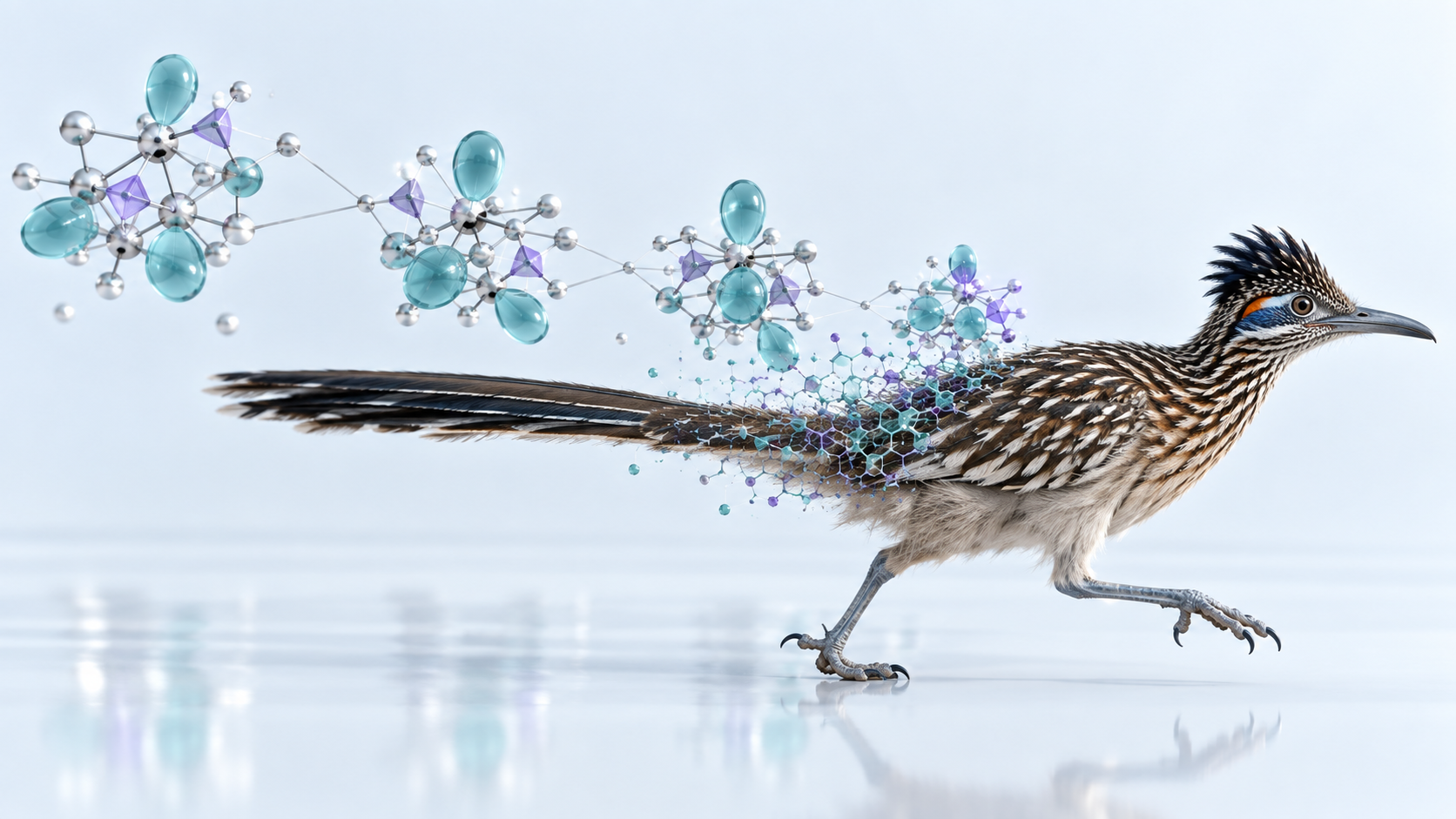
v2.15.0 “Roothaan’s Roadrunner” — the monorepo splits into four repositories.
v2.16.0 — Sayle’s Starling
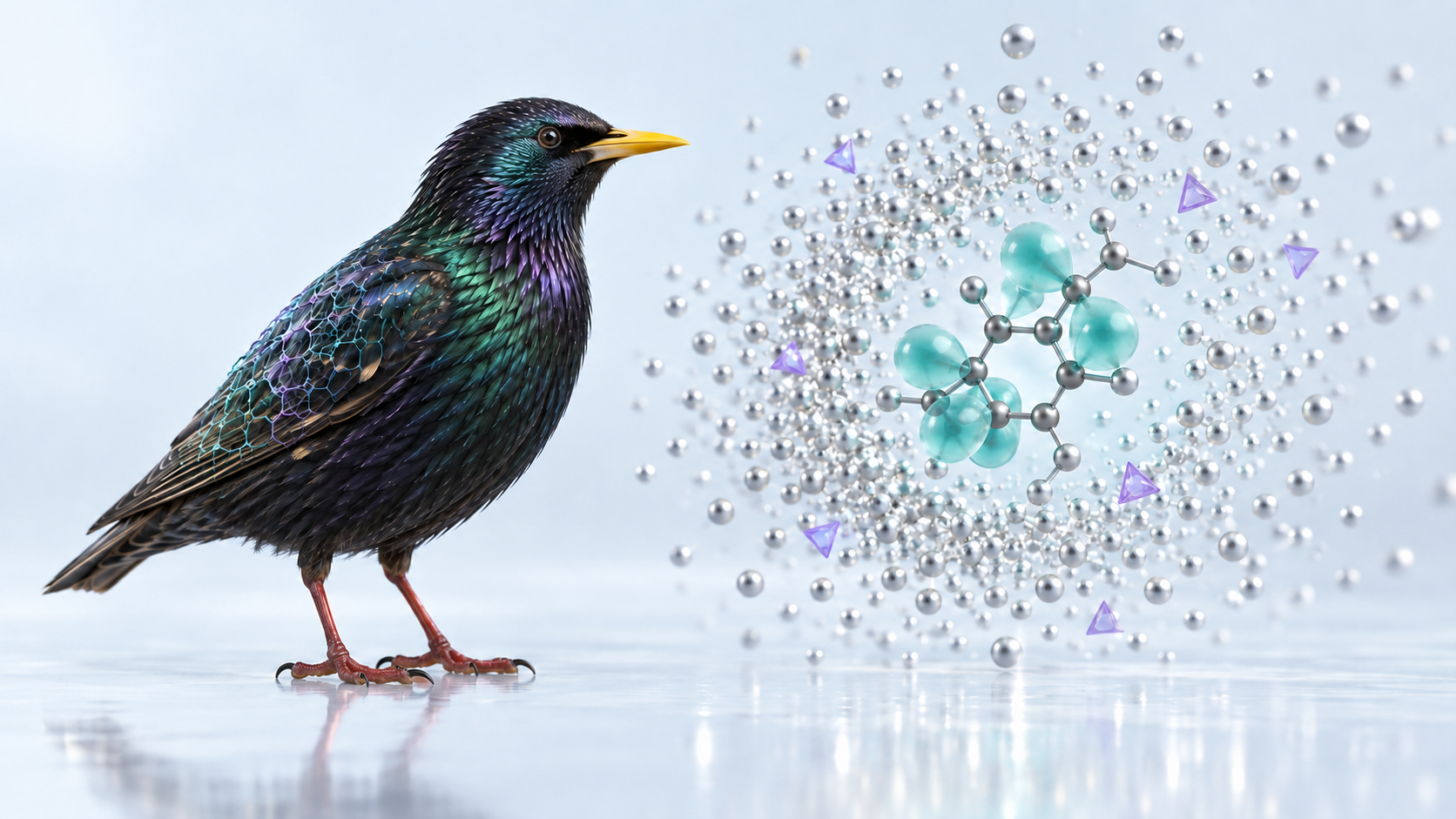
v2.16.0 “Sayle’s Starling” — a product you can adopt on its own.
v2.17.0 — Lorensen’s Loon

v2.17.0 “Lorensen’s Loon”.
v2.18.0 — Richardson’s Robin
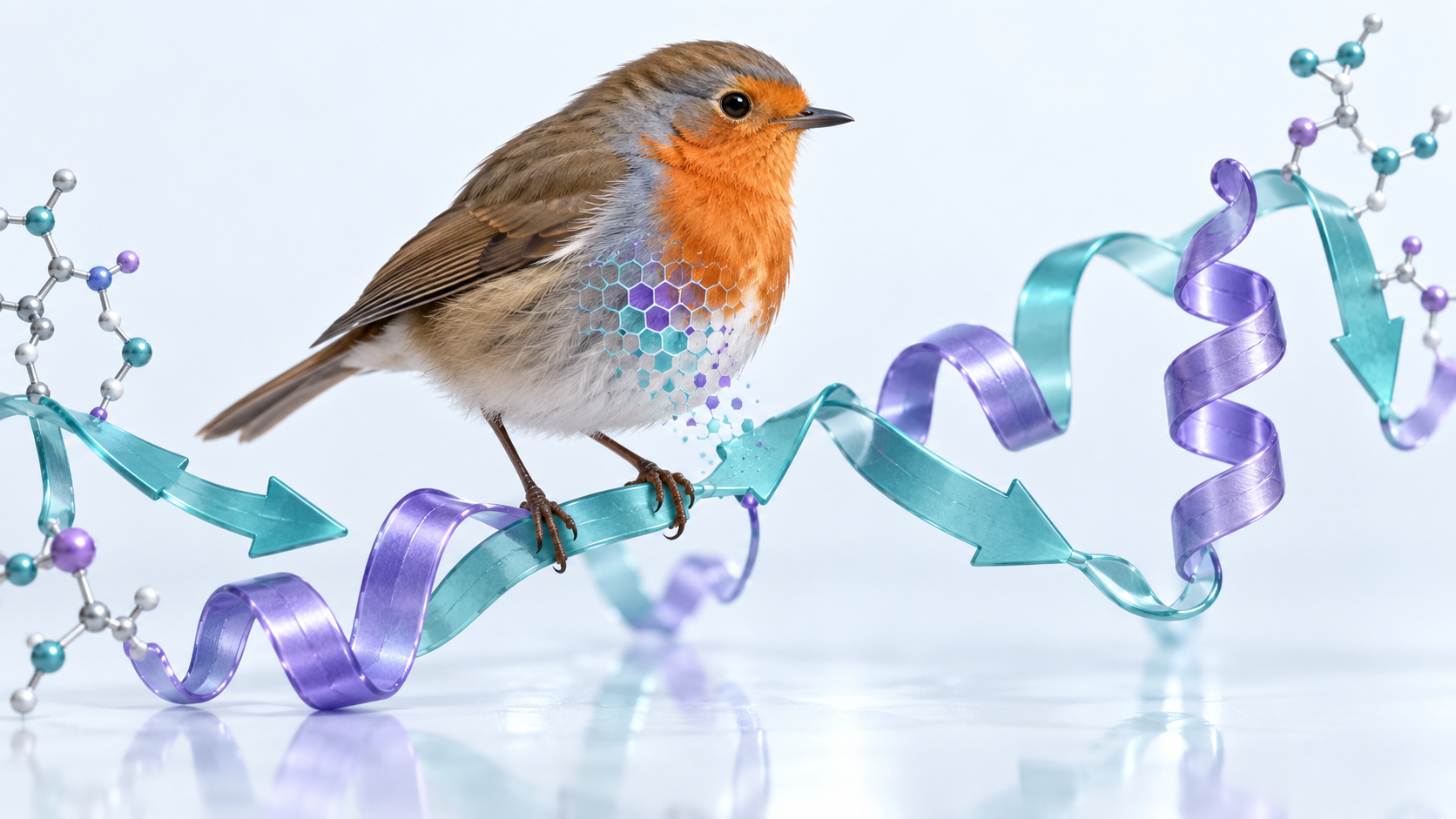
v2.18.0 “Richardson’s Robin”.
v2.19.0 — Phong’s Pheasant

v2.19.0 “Phong’s Pheasant”.
v2.20.0 — Levoy’s Lemur

v2.20.0 “Levoy’s Lemur”.
v3.0.0 — Levinthal’s Lynx

v3.0.0 “Levinthal’s Lynx”.
Proposed pool
Warning
A pool, not a schedule. Codenames are a maintainer decision. Six names have been picked out of this pool already; their rows below are marked taken with the version that holds them, and the catalogue at the top of this page is the authority. Every unmarked row is unclaimed, and no release should be tagged against one until the maintainer picks it.
Mark the row in the same commit that registers the name. A prose note saying
an animal is spent does not help the next picker, because what they read is
the table: they choose it, write the rationale, and only then does
test_the_catalogue_never_reuses_an_animal tell them it collides.
The field vibe-view belongs to is the one that turned computed numbers into something you can look at. Three strands, all of them ancestors of this program:
Molecular graphics — the people who first made a molecule something you could rotate on a screen.
Person |
Contribution |
Proposed animal |
|---|---|---|
Cyrus Levinthal |
The first interactive molecular graphics system (MIT, 1965) |
Lynx — taken, v3.0.0 |
Robert Langridge |
Interactive molecular graphics for biology, 1960s–70s |
Lark |
Jane Richardson |
The ribbon diagram (1981) — the cartoon this viewer draws |
Robin — taken, v2.18.0 |
Michael Connolly |
The solvent-excluded molecular surface (1983) |
Condor |
Roger Sayle |
RasMol (1992) — the first molecular viewer anyone could just install |
Starling — taken, v2.16.0 |
Nelson Max |
Early molecular surface rendering |
Marten |
Computer graphics — the algorithms the renderer is literally built out of.
Person |
Contribution |
Proposed animal |
|---|---|---|
William Lorensen |
Marching cubes (1987); a founder of VTK, which this viewer renders with |
Loon — taken, v2.17.0 |
Will Schroeder |
VTK co-creator, The Visualization Toolkit |
Stork |
Bui Tuong Phong |
The Phong reflection model — the shading a molecular scene uses |
Pheasant — taken, v2.19.0 |
Jim Blinn |
Blinn–Phong; blobby models, i.e. isosurfaces of summed densities |
Bittern |
Marc Levoy |
Direct volume rendering (1988) |
Lemur — taken, v2.20.0 |
Turner Whitted |
Recursive ray tracing (1980) |
Wren |
James Kajiya |
The rendering equation (1986) |
Kite |
Edwin Catmull |
Z-buffer, texture mapping, subdivision surfaces |
Curlew |
Ivan Sutherland |
Sketchpad (1963) |
Swift |
Ken Perlin |
Perlin noise |
Petrel |
Arthur Appel |
The first ray casting (1968) |
Auk |
Crystallographic imaging — seeing structure that no microscope could resolve.
Person |
Contribution |
Proposed animal |
|---|---|---|
Kathleen Lonsdale |
X-ray crystallography; proved benzene planar (1929) |
Linnet |
Dorothy Hodgkin |
Structures of penicillin, B12, insulin; Nobel 1964 |
Heron |
Rosalind Franklin |
Photo 51 |
Falcon |
Max von Laue |
X-ray diffraction by crystals; Nobel 1914 |
Lapwing (Lark is Langridge’s) |
A. Lindo Patterson |
The Patterson function |
Pelican |
Herbert Hauptman |
Direct methods; Nobel 1985 |
Hare |
Data visualization, if a release is ever about the charts rather than the 3-D scene: Jacques Bertin (Bittern), Edward Tufte (Toucan), John Tukey (Tapir).
Names already spent by vibe-qc, and therefore unavailable: Raven, Eagle, Wolf, Magpie, Hedgehog, Otter, Owl, Kingfisher, Goose, Cheetah, Puffin, Tern, Badger, Raccoon, Sloth, Axolotl, Llama.
Names taken out of the pool
Every name below is registered in RELEASE_CODENAMES and appears in the
catalogue at the top of this page. They are kept here with their reasoning
because the why is the point: each is tied to what that release would
actually be about, the way the vibe-qc series does it, and that is what keeps
the names from being decoration.
v2.16.0 — Sayle’s Starling — see above.
- v2.17.0 — Lorensen’s Loon
For a release centred on isosurfaces and volume rendering. William Lorensen gave us marching cubes (1987) — the algorithm behind every density and orbital surface this viewer draws — and co-founded VTK, which it renders with. The most directly earned name in the pool. A loon dives and surfaces.
- v2.18.0 — Richardson’s Robin
For biomolecular work — chains, residues, secondary structure, cartoons. Jane Richardson invented the ribbon diagram in 1981, and it is still what the viewer draws when a
structuresection carries secondary structure.- v2.19.0 — Phong’s Pheasant
For materials and lighting, anchoring a release in the renderer rather than in the product. Bui Tuong Phong’s reflection model is how a molecular scene is lit.
- v2.20.0 — Levoy’s Lemur
For transfer functions. Marc Levoy’s direct volume rendering (1988) takes colour and opacity straight from the data without extracting a surface — the other half of the volume story from Lorensen’s.
- v3.0.0 — Levinthal’s Lynx
For a major version, if one is about the interactive viewer itself. Cyrus Levinthal built the first interactive molecular graphics system in 1965, on hardware that had no business doing it. A lynx is what you name the thing that sees in the dark.
Two consequences for the pool above:
Lynx is spent, so Kathleen Lonsdale’s entry above now reads Linnet alone. It offered Lynx / Linnet until v3.0.0 took Lynx; leaving the alternative in the table would have handed the next picker a collision the test only catches after they have written the rationale. Every other registered name is now marked taken in the pool tables for the same reason.
Lark was offered twice — to Robert Langridge and to Max von Laue — which the one-animal-per-family rule forbids and no test can see, since neither is registered. Von Laue’s row now proposes Lapwing.
Blinn’s Bittern (blobby models — isosurfaces of summed atomic densities, which is exactly what a density surface is) remains the strongest unclaimed candidate for a renderer-anchored release.
Adding a name at release time
In the same commit that bumps the version:
Add the
X.Y.0entry toRELEASE_CODENAMESinsrc/vibeview/codenames.py, with a comment saying who the person is and why the release earned the name.Update the trailing comment on
__version__insrc/vibeview/__init__.py.Promote
## [Unreleased]inCHANGELOG.mdto## [X.Y.Z] - YYYY-MM-DD - *Person's Animal*.Add the row to the catalogue table on this page.
tests/test_release_codenames.py checks that every surface agrees with the
catalogue — the CLI, the browser About box, the Electron fallback string and
the version comment. Before the catalogue existed the name was pasted into
each by hand, and nothing could see them drift.
Artwork
Each release gets a 1672 × 941 image in one of the two house treatments the vibe-qc series established. The brief for the next one is written before the release and lives with private release coordination outside this checkout. The images above are AI-generated artwork, separate from the real software captures used in the manual.