vibe-qc
Quantum chemistry for molecules and solids.
vibe-qc is a Python + C++17 electronic-structure code. The molecular stack, Hartree-Fock, density-functional theory, Møller-Plesset theory, analytic gradients, D3(BJ) dispersion, is validated against PySCF to machine precision. The periodic stack delivers 1D / 2D / 3D Hartree-Fock and Kohn-Sham DFT with Monkhorst-Pack k-meshes, Ewald-summed Madelung, band structure and density of states, and is is growing toward CRYSTAL-style crystalline-orbital calculations at full-SCF accuracy. COOP/COHP bonding analysis and periodic Mayer bond orders are available for 1D/2D/3D systems.
Built on libint (Gaussian integrals), libxc (500+ XC functionals), and spglib (crystal symmetry). Licensed MPL-2.0.
Current release: 0.15.42 - Neese’s Cheetah
The site you’re looking at renders the release branch - the
fast-forward-only public snapshot. main is at a higher
X.Y.dev0 development version; see release_process
for the branch model. Per-release codenames (Scientist + Animal,
loosely tied to whatever shipped) are catalogued in the
release-codenames roadmap entry.
💚 vibe-qc is funded by individual sponsors
vibe-qc is built and maintained by one person
in evenings and weekends, on personal hardware, with no institutional
backing. If the project is useful to you - or if you think the Cyclic
Cluster Model reaching CCSD(T) on an open-source code is worth existing -
please consider supporting it via
GitHub Sponsors (recurring
monthly, zero fees) or
Ko-fi (one-time, no GitHub account
required). Every sponsorship directly funds the Claude Max
subscription that drives day-to-day development, the self-hosted
server behind vibe-qc.com, and - most urgently - bigger hardware:
the project currently develops on a single Apple M2 laptop, and that’s
what caps every regression test, CI benchmark, and CRYSTAL-Tutorial
port to small systems. Smallest single actionable item right now:
the NIST Crystal Data SRD 3 single-user
subscription
at $200/year - fully fundable by one sponsor for a year, and
unlocks programmatic access to a curated crystallographic
database for the CCM reference work. See the
support page for the full
pitch and the near-/long-term hardware goals; public sponsors are
listed on the sponsors page.
🖥️ macOS desktop auto-update is donation-gated
The vibe-view desktop app already checks the update feed and notifies you when a newer build ships - but on macOS it cannot install the update by itself. Apple only lets an app self-update if it’s signed with a paid Apple Developer ID (~USD 99/year); until that certificate is funded, the macOS app detects the new version and offers a manual Download… button instead of a hands-off restart-to-install. A single USD 100 donation - via GitHub Sponsors or Ko-fi - covers the certificate for a year and flips macOS to real auto-update, with no code change needed. (Linux and Windows self-update without any such certificate.)
✅ New in v0.15 (Neese’s Cheetah)
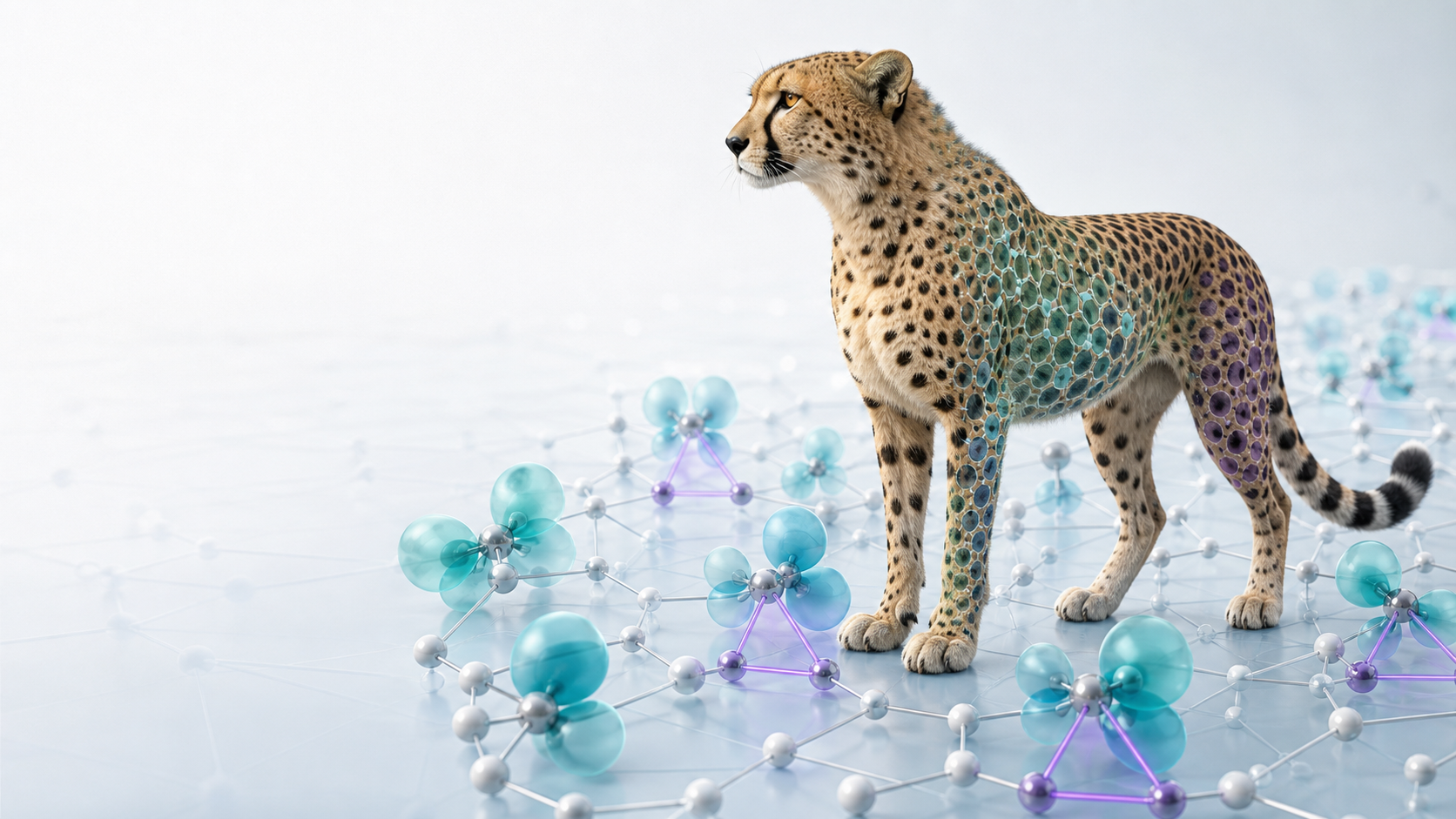
v0.15’s headline features:
DLPNO local correlation – DLPNO-MP2 local density fitting, sparse pair lists, the DLPNO-CCSD per-pair solver, DLPNO-(T1), open-shell U-DLPNO-MP2 / U-DLPNO-UCCSD(T) pilots, and CCM DLPNO routes for the AICCM work.
TD-DFT engine – Casida + Tamm-Dancoff approximation for RHF/RKS/UHF/UKS, with Natural Transition Orbitals and UV/Vis spectrum reconstruction.
Production CASSCF analytic gradients – FD-tight to ~1e-7 (default
compute_wz=Falsepath); geometry optimization now uses the analytic gradient for state-specific closed-shell CASSCF.Exact IC-CASPT2 analytic gradients – coupled orbital/CI response for unshifted, state-specific closed-shell CASSCF references on the explicit engine, FD-pinned on H2 and core-containing LiH.
Eigensolver framework – Davidson (iterative Fock diagonalization), LOBPCG (3-12x faster), plus experimental Jacobi-Davidson and GPLHR; selectable by
solver=keyword.Periodic-DFT accuracy fix – cross-cell XC density now correct on dense ionic crystals (MgO/STO-3G within ~1 mHa of CRYSTAL23).
COOP/COHP bonding analysis (C++ kernels, QVF, plotters,
vibeqc coopCLI), QTAIM topological analysis (critical-point search, bond-path tracing), periodic Mayer bond orders (k-space generalization).QVF v1.2 – localized orbitals, bond orders, fat bands, and QTAIM sections; vibe-view consumption; runner auto-population.
Also new: the basis_toolkit import/export system, periodic COSX and
Mixed Density Fitting (MDF), the geometry-optimizer framework,
the AICCM cyclic cluster model (Γ-CCM + χ-CCM, experimental),
GAPW experimental warning gating, and more.
See CHANGELOG for the full notes.
🔜 Current focus: v0.15.x release-paper hardening
The 0.15.x line is the release-paper hardening series: gate-red fixes, periodic accuracy cleanup, complete reproducibility artifacts, and visualization-ready QVF outputs for the AICCM/CCM work. New minor-version feature promises stay off the homepage until the paper is submitted.
See the roadmap for the full plan.
For the current open-issues list (workarounds, regression-test
pointers, status of each known bug), see
troubleshooting and the
issue tracker.
Install
git clone https://gitlab.peintinger.com/mpei/vibeqc.git
cd vibeqc
./scripts/install.sh                 # native deps + venv + pip install + banner
install.sh accepts --dev (main), --branch NAME (any branch
or tag), and other knobs, see installation.md
for the full surface and the manual setup_native_deps.sh recipe.
git clone lands you on the latest tagged release (the project’s
default branch is release, which fast-forwards from each new tag);
add --dev for bleeding-edge main or --branch vX.Y.Z to pin
a specific tag for reproducibility.
setup_native_deps.sh builds and installs every native dependency
(libint, libxc, spglib, FFTW3, libecpint) into third_party/ and
populates the bundled basis library. Re-running is a no-op if
everything’s already built. Full per-platform dependency lists
(macOS / Arch / Manjaro / Debian / Ubuntu) are in
installation.
Your first calculation
Make a working directory outside the repo, vibe-qc writes its
outputs into the current working directory, and you don’t want
.out / .molden / .traj files landing inside the source
tree:
mkdir -p ~/vibeqc-runs/water
cd ~/vibeqc-runs/water
Save the following as water.py in that directory (any filename
works, vibe-qc just runs whatever Python you point it at):
from vibeqc import Atom, Molecule, run_job

mol = Molecule([
    Atom(8, [ 0.0,  0.00,  0.00]),
    Atom(1, [ 0.0,  1.43, -0.98]),
    Atom(1, [ 0.0, -1.43, -0.98]),
])

run_job(
    mol,
    basis="6-31g*",
    method="rks",
    functional="PBE",
    dispersion="d3bj",
    optimize=True,
    output="water",
)
Run it with the virtual-env’s Python (the one pip install
populated above, not your system python3). Since you’re no
longer in the repo, give the full path:
~/path/to/vibeqc/.venv/bin/python water.py
Replace ~/path/to/vibeqc/ with wherever git clone landed.
That ~3-second run produces three files in ~/vibeqc-runs/water/:
water.out, banner, SCF trace, energy breakdown, orbital table, HOMO-LUMO gap, Mulliken / Löwdin charges, Mayer bond orders, dipole, and wall-clock timings.water.molden, molecular orbitals for Avogadro / Jmol.water.traj, ASE trajectory for the optimization, viewable withase gui water.traj.
Tip
Skip the path prefix. Activate the venv once per shell session and the path resolves automatically - works from any directory:
source ~/path/to/vibeqc/.venv/bin/activate    # bash / zsh
python water.py                                # uses the venv's python
Deactivate with deactivate when you’re done.
Common mistake: ModuleNotFoundError: No module named 'vibeqc'
means you ran the wrong Python. Either give the full
~/path/to/vibeqc/.venv/bin/python path or activate the venv
first. The bare .venv/bin/python shorthand only works when your
shell is sitting inside the repo.
See quickstart for a 30-minute end-to-end
walkthrough (HF, periodic SCF, orbital cube), running
for the full “how to invoke vibe-qc scripts” reference (venv,
threading, output capture, SSH workflows),
good practices for the working conventions
nobody tells you (file layout, naming, when to trust a number),
the tour for the wider API surface (run_job, ASE
Calculator, logging, custom basis sets, tests), or dive into the
tutorials for worked examples.
Capabilities today
Molecular. Restricted and unrestricted HF / KS-DFT with analytic nuclear gradients. The full libxc functional library, LDA, GGAs, hybrids, the τ-dependent meta-GGA family (TPSS, M06-2X, SCAN, r²SCAN, r²SCAN01), range-separated hybrids (ωB97X, ωB97X-D, and the VV10-paired ωB97X-V / ωB97M-V), and the PW1PW weighted-sum functional, all supported. Møller-Plesset theory (MP2 / UMP2 / RI-MP2 / SCS-MP2 / SOS-MP2 / open-shell UMP2) and the B2PLYP / DSD-PBEP86 / revDSD-PBEP86-D4 double hybrids. Density fitting with the RIJK and RIJCOSX Fock-build kernels (RIJCOSX validated to 0.13 mHa vs ORCA 6.1.1). Effective core potentials for heavy-element chemistry. CPCM / COSMO implicit solvation via the SolutePotentialProvider seam. Grimme D3(BJ) / D4 dispersion. 239 bundled Gaussian basis files, including the solid-state pob-* family. All validated against PySCF and ORCA.
Wavefunction methods. Canonical CCSD(T), the gold-standard
molecular correlation reference: closed-shell, plus open-shell
(UCCSD / UCCSD(T) on a UHF reference, ROHF-reference CCSD / CCSD(T)) and
frozen natural orbitals for cheaper (T). DLPNO-CCSD(T), the
near-linear-scaling local CCSD(T) accurate to ~1 kcal/mol vs canonical,
plus open-shell DLPNO-UMP2 and DLPNO-UCCSD(T) pilot. The DLPNO-(T1)
scaling-preserving exact triples. Multi-root CASCI with state-averaged
CASSCF (analytic nuclear gradient FD-tight
to ~1e-7, shipped in v0.15.0). TDDFT via the Casida linear-response
formalism and the Tamm-Dancoff approximation (RHF/RKS/UHF/UKS), with
Natural Transition Orbitals and FD excited-state gradients.
Eigensolver framework: Davidson, LOBPCG
(GF2 / OVGF, renormalised GF2). The vibeqc.solvers family, Full CI,
selected CI, DMRG, variational 2-RDM, via
vibeqc.solvers. General atomisation
energies and RRHO thermochemistry.
Semiempirical + MLIP. The MSINDO semiempirical engine covers
elements H-Br (Z 1-35, including 3d and 4th-row p-block), supports
NDDO mode, molecular geometry optimisation, implicit solvation
(COSMO), NEB, velocity-Verlet molecular dynamics, well-tempered
metadynamics, and penalty-function MECI conical-intersection
optimisation. The MACE machine-learning interatomic potential
(method="mace") is available as an alternative energy surface.
GFN2-xTB rounds out the semiempirical roster.
Periodic. 1D / 2D / 3D PeriodicSystem geometry, Monkhorst-Pack
k-meshes with IBZ reduction. Native Gaussian density fitting (GDF,
Γ-point RHF / RKS + hybrids, multi-k KRHF / KRKS; µHa parity vs PySCF
on LiH) and the production GPW (Gaussian Plane Waves) route through
run_periodic_job (Γ-only RHF / UHF / RKS / UKS, multi-k pure-DFT
RKS; the MPI grid overlay is experimental). The BIPOLE route covers
Γ + multi-k RHF / UHF / RKS / UKS: multi-k KS analytic gradients
with space-group symmetry and multipole L=3, closing the BIPOLE
analytic gradient gate. 3D Ewald with CRYSTAL-α gauge unification.
Fermi-Dirac, Methfessel-Paxton, and Marzari-Vanderbilt smearing for
metals, with Anderson / Broyden / Kerker density mixers and an AUTO
k-point and smearing recommender. MSINDO periodic CCM through bulk
MgO (Wigner-Seitz, periodic INDO, Ewald Madelung). Experimental
ab-initio CCM: two independent lines, Γ-CCM
(union-and-weight/Wigner-Seitz integral weighting, HF→CCSD(T)) and
χ-CCM (finite-character, 3D SCF +
finite-torus correlation). They are under active side-by-side study on a
28-system benchmark, but no cross-approach delta is currently reportable. Band structure
and density-of-states plotters. COOP/COHP bonding analysis
(Crystal Orbital Overlap/Hamilton Population; C++ kernels, QVF,
plotters, vibeqc coop CLI). Periodic Mayer bond orders
(k-space generalisation). Fat bands (Mulliken-projected band
weights). QTAIM topological analysis (critical-point search +
bond-path tracing). Gaussian cube + extended-XYZ +
POSCAR + XSF / BXSF writers, plus POSCAR and Extended-XYZ readers
and CIF readers with opt-in geometry symmetrisation.
Tooling. OpenMP parallelism throughout; optional mpi4py
substrate for future MPI parallelism (GPW grid overlay experimental;
production strategy in MPI Parallelization).
Pre-flight memory budget estimator.
ASE Calculator integration for geometry optimization, vibrational
frequencies, and NEB. Automatic per-job citation files
(.bibtex / .references). The
vibe-view interactive 3D viewer for
structure / orbitals / densities / bands / COOP/COHP / spectra /
trajectories out of every .qvf archive (QVF v1.2, 40 canonical
writer kinds: 39 first-class viewer kinds plus bonds via the
structure renderer). The
basis_toolkit for
basis-set import/export (BSE, CRYSTAL, G94, NWChem, ORCA). The
vq queue for remote job submission.
See the feature matrix for details and the roadmap for what’s next.
Where to go next
Getting started
- Installation
- Quickstart, your first 30 minutes
- Using Claude to drive vibe-qc
- Setup: point Claude at the docs (the key step)
- A first session, end-to-end: corundum (α-Al₂O₃)
- A second session, Claude Code in the loop: water dimer with dispersion
- Workflow patterns
- What to paste back to Claude
- What Claude can’t see
- Pitfalls and how to dodge them
- End-to-end worked example: SMILES to IR spectrum
- Best practices
- Where to next
- Running vibe-qc
- The fundamental rule
- Two ways to invoke the venv’s Python
- Running a one-off calculation
- Running interactively (Jupyter / IPython)
- Capturing output (long runs, batch logs)
- Controlling threading
- Running on a remote machine via SSH
- Personal job queue (planned, v0.5)
- Running on a cluster with a job queue
- Running the test suite
- Common errors and quick fixes
- Where to go next
- Good practices
- Troubleshooting
- SCF didn’t converge
- “Canonical orth dropped too many basis directions”
- Memory abort before the SCF starts
KeyError: 'Ne'(or any other element) on basis load- “DF gradient disagrees by ~115 mHa/bohr”
- “Analytic RHF gradient is wrong”
- “Periodic (BIPOLE) forces / geometry optimisation look wrong”
- CASPT2/NEVPT2
compute_corr_grad=Truegradient has no PT2 correction (v0.15.17) - Multi-k GDF HF / hybrid-KS exchange wrong on diffuse bases in tight cells (v0.15.26 to v0.15.31)
- Multi-k BIPOLE RHF raises
TypeErrorinstantly; BIPOLE RKS ignoresbz_integration="gilat"(v0.15.23 to v0.15.30) ImportError: cannot import name 'EEQOptions' from 'vibeqc._vibeqc_core'ModuleNotFoundError: No module named 'vibeqc'- “Cell-list construction returned 0 cells”
vibeqc-cite: manifest missingafter a job- Native D4 dispersion (
backend="native") scope + accuracy - Things that are not errors
- BIPOLE absolute energies on tight ionic crystals (fixed, corrected gauge is the default at Γ and multi-k, all four drivers)
- Still stuck?
- Updating vibe-qc
- Building and running vibe-qc on a uni cluster
- Tour of the vibe-qc API
Tutorial
User guide
- User guide
- Molecules
- Basis sets
- Molecular basis-set optimisation
- Molecular naming
- Functionals
- ROHF and ROKS (restricted open-shell SCF)
- MP2 and double hybrids
- CC2, CC3, CCSD, CCSDT, QCISD, and perturbative triples
- DLPNO methods (MP2, CCSD, CCSD(T))
- Non-mean-field solvers (
vibeqc.solvers) - Composite “3c” methods
- Machine-learning interatomic potentials (MACE)
- Semiempirical Methods
- Semiempirical and MACE method comparison
- MSINDO (semiempirical INDO)
- DFT+U (Hubbard correction)
- Effective core potentials (ECPs)
- Periodic systems
- Crystal lattices
- Slabs and adsorbates
- Green’s-function surface embedding
- k-point meshes
- Multi-k periodic SCF
- Ewald summation in periodic systems
- BIPOLE: Ewald-J-split periodic HF and DFT
- Plane-wave Hartree-J via GPW / GAPW
- Periodic-SCF methods: BIPOLE, GDF, GPW / GAPW
- Periodic JK routes, method-family parity policy
- The cyclic cluster model (CCM)
- χ-CCM / aiccm2026dev-b (experimental)
- AICCM - Γ-CCM, the
aiccm2026dev-aline (experimental) - χ-CCM / aiccm2026dev-b: an independent finite-torus derivation
- χ-CCM / aiccm2026dev-b decisions and open questions
- COOP/COHP: bonding analysis for periodic systems
- SCF convergence
- SCF Fock-build modes
- Initial guesses
- Smearing (fractional occupations for periodic SCF)
- Metallic BZ integration: the Gilat-Raubenheimer net
- Linear dependence and screening in periodic SCF
- Density fitting (RIJ / RIJK / RIJCOSX)
- Implicit solvation (CPCM / COSMO)
- Settings introspection
- Memory budget
- Relaxed coordinate scans
- Nudged Elastic Band (NEB)
- Molecular dynamics
- Post-SCF properties
- Bond analysis: Wiberg, NPA/NBO, EDA, and orbital entanglement
- Band structure and density of states
- Volumetric data: cube, XSF, and BXSF files
- The
data_library/parameter-storage standard - Experimental reference data (
vqfetch reference) - QTAIM: topological analysis of the electron density
- ASE integration
- External QC codes (ORCA / Psi4 / others)
- External structures (
vqfetch) - Moving from PySCF
- Moving from CRYSTAL
- Moving from ORCA
- Moving from Gaussian
- Input scripts and output files
- The output logger (
vibeqc.output) - Automatic citations
- BLAS + LAPACK backend
- vibe-view: interactive viewer
- vibe-view desktop app (macOS, Windows, Linux)
- The vq calculation queue
- Running vibe-qc from Jupyter Lab
- Keyword index
- Basis-set toolkit
Design documents
- QVF-Basis – Architecture Review & Design Decision
- Design - QVF container format for visualization data
- Design,
vibeqc.output(unified output, logging, and citation surface) - Integrals first: the public integral primitives and their backends
- Design, native vibe-qc GDF (Method 1 of the periodic JK roadmap)
- Design, RSGDF 3-centre long-range half (
rsgdf_lr_3c_tensor) - Design,
basis.aosection for basis-function visualization - Design, periodic GAPW / GPW (and a path to PAW + ACE)
- Design: Mixed Density Fitting (MDF) for all-electron µHa periodic GDF
- Design, periodic smearing as a shared backend-agnostic utility
- MPI Parallelization Strategy
- vibe-qc GPW/GAPW vs GPAW Program – Architectural Comparison
- χ-CCM / aiccm2026dev-b: an independent finite-torus derivation
- QVF-Basis – Developer README
- QVF-Basis – Conversion Fidelity Matrix
vibe-view
QVF format toolkit
Project
- Unreleased
- [v0.15.42] - 2026-07-17 - Neese’s Cheetah
- [v0.15.41] - 2026-07-16 - Neese’s Cheetah
- [v0.15.40] - 2026-07-15 - Neese’s Cheetah
- [v0.15.39] - 2026-07-14 - Neese’s Cheetah
- [v0.15.38] - 2026-07-13 - Neese’s Cheetah
- [v0.15.37] - 2026-07-12 - Neese’s Cheetah
- [v0.15.36] - 2026-07-12 - Neese’s Cheetah
- [v0.15.35] - 2026-07-11 - Neese’s Cheetah
- [v0.15.34] - 2026-07-11 - Neese’s Cheetah
- [v0.15.33] - 2026-07-10 - Neese’s Cheetah
- [v0.15.32] - 2026-07-10 - Neese’s Cheetah
- [v0.15.31] - 2026-07-10 - Neese’s Cheetah
- [v0.15.30] - 2026-07-07 - Neese’s Cheetah
- [v0.15.29] - 2026-07-07 - Neese’s Cheetah
- [v0.15.28] - 2026-07-05 - Neese’s Cheetah
- [v0.15.27] - 2026-07-05 - Neese’s Cheetah
- [v0.15.26] - 2026-07-05 - Neese’s Cheetah
- [v0.15.25] - 2026-07-04 - Neese’s Cheetah
- [v0.15.24] - 2026-07-04 - Neese’s Cheetah
- [v0.15.23] - 2026-07-04 - Neese’s Cheetah
- [v0.15.22] - 2026-07-04 - Neese’s Cheetah
- [v0.15.21] - 2026-07-03 - Neese’s Cheetah
- [v0.15.20] - 2026-07-03 - Neese’s Cheetah
- [v0.15.19] - 2026-07-03 - Neese’s Cheetah
- [v0.15.18] - 2026-07-02 - Neese’s Cheetah
- [v0.15.17] - 2026-07-02 - Neese’s Cheetah
- [v0.15.16] - 2026-07-02 - Neese’s Cheetah
- [v0.15.15] - 2026-07-02 - Neese’s Cheetah
- [v0.15.14] - 2026-07-02 - Neese’s Cheetah
- [v0.15.13] - 2026-07-01 - Neese’s Cheetah
- [v0.15.12] - 2026-07-01 - Neese’s Cheetah
- v2.0.0 - 2026-07-01 - Pauling’s Panther
- [v0.15.11] - 2026-07-01 - Neese’s Cheetah
- [v0.15.10] - 2026-07-01 - Neese’s Cheetah
- [v0.15.9] - 2026-07-01 - Neese’s Cheetah
- [v0.15.8] - 2026-06-30 - Neese’s Cheetah
- [v0.15.7] - 2026-06-30 - Neese’s Cheetah
- [v0.15.6] - 2026-06-29 - Neese’s Cheetah
- [v0.15.5] - 2026-06-29 - Neese’s Cheetah
- [v0.15.4] - 2026-06-29 - Neese’s Cheetah
- [v0.15.3] - 2026-06-29 - Neese’s Cheetah
- [v0.15.2] — 2026-06-28 — Neese’s Cheetah
- [v0.15.1] — 2026-06-26 — Neese’s Cheetah
- [v0.15.0] — 2026-06-26 — Neese’s Cheetah
- [v0.14.1] — 2026-06-24 — Bartlett’s Goose
- [v0.14.0] — 2026-06-22 — Bartlett’s Goose
- [v0.13.1] — 2026-06-17
- [v0.13.0] — 2026-06-17 — Wisesa’s Fox
- [v0.12.2] — 2026-06-12
- [v0.12.1] — 2026-06-12
- [v0.12.0] — 2026-06-12 — Knuth’s Beaver
- [v0.11.4] — 2026-06-05
- [v0.11.3] — 2026-06-04
- [v0.11.2] — 2026-06-04
- [v0.11.1] — 2026-06-03
- [v0.11.0] — 2026-06-03 — Sun’s Stingray
- [v0.10.5] — 2026-06-01
- [v0.10.4] — 2026-06-01
- [v0.10.3] — 2026-05-30
- [v0.10.2] — 2026-05-29
- [v0.10.1] — 2026-05-29
- [v0.10.0] — 2026-05-27 — Pisani’s Penguin
- [v0.9.1] — 2026-05-22
- [v0.9.0] — 2026-05-22 — Knowles’s Kingfisher
- Historical Codename Artwork (pre-v0.9.0)
- Release process
- Contributing to vibe-qc
- Contributor setup, fresh-clone bootstrap and rebuild discipline
- Developer Test Lanes
- Support vibe-qc
- Sponsors
- How to cite vibe-qc
- License + bundled-data inventory
- Example scripts and generated outputs
Status
vibe-qc is pre-release software heading toward a 1.0 feature-complete milestone. The molecular stack (HF/DFT/MP2/CCSD(T)/DLPNO-CCSD(T)/ TDDFT/CASSCF) is stable and production-ready. The periodic stack supports three production routes: GDF (µHa parity vs PySCF), GPW (Gaussian Plane Waves with Γ-point analytic gradients; MPI grid overlay experimental), and BIPOLE (Ewald-J with multi-k KS analytic gradients). The eigensolver framework (Davidson / LOBPCG + experimental Jacobi-Davidson / GPLHR) is selectable by keyword. Analysis tools (COOP/COHP, QTAIM, Mayer bond orders, fat bands) and the basis_toolkit import/export system shipped in v0.15.0. The ab-initio CCM (Γ-CCM and χ-CCM) ships as experimental. Follow the roadmap for what’s next.
Licensed under the Mozilla Public License 2.0. Source at gitlab.peintinger.com/mpei/vibeqc.
Feedback and bug reports
Found a bug, have a feature request, or want to send a patch? The decision tree lives in CONTRIBUTING.md. The short version:
Bugs / install problems / feature requests → GitLab issue tracker
Security vulnerabilities → email
mpei@vibe-qc.com(see SECURITY.md)General feedback / questions → email
mpei@vibe-qc.comSponsor the project → see Support vibe-qc (GitHub Sponsors, Ko-fi)